User Research Jobs: A 2026 Guide to Landing Your Role
Your complete guide to user research jobs in 2026. Learn about roles, skills, salary trends, and how to stand out with a modern portfolio and tools like Uxia.
You're probably seeing the same thing most candidates see when they search for user research jobs. One listing wants a UX Researcher. Another wants a Product Researcher. A third looks like a design role with a research-heavy brief. A fourth asks for interviews, surveys, analytics, and stakeholder strategy all in one post.
That confusion is normal. Titles are messy, hiring is uneven, and the role is changing faster than most career advice admits. The actual question isn't what the title says. It's what the team expects you to do with evidence.
The strongest candidates understand that a modern user researcher doesn't just “talk to users.” They help teams reduce product risk, clarify decisions, and move faster without lowering the quality bar. That's also why AI tools are now part of the conversation. Teams want rigor, but they also want speed. If you're aiming for user research jobs in 2026, you need both.
What a Modern User Research Job Really Involves
Search results for user research jobs still create the wrong impression. They often focus on title variations, not on how the work itself is shifting. Public job-board snippets also show a fragmented market across titles such as User Experience Researcher, UX Researcher Contractor, Product Designer, and Researcher, which makes it harder to tell what skills employers actually want, as noted in Indeed job listings for user researcher roles.
The job is evidence, not interviews
The core function is simple. A researcher helps a team make better decisions by producing credible evidence from the right methods.
That can mean interviews, usability tests, surveys, behavioral analysis, diary studies, or concept validation. In practice, the method matters less than the decision it supports. Good researchers know when a quick directional read is enough and when a high-stakes launch needs deeper human investigation.
Practical rule: If you can't explain what decision your study will influence, the study probably isn't scoped well enough.
Modern product teams also expect researchers to be close to delivery. You're not there to produce an interesting report that sits in a folder. You're there to help product managers, designers, and engineers decide what to build, what to change, and what to stop.
Speed now matters more than it used to
The role has shifted here. Traditional research cycles can still be the right choice, especially for foundational work, sensitive topics, or high-context discovery. But many teams now need answers earlier, with tighter deadlines and smaller budgets.
That changes what employers look for in candidates:
Method judgment: You need to choose the right level of rigor for the question.
Clear synthesis: Teams want findings turned into actions, not transcripts dumped into slides.
Operational fluency: You need to work inside product timelines, not outside them.
AI awareness: You should understand when faster testing helps and when it creates false confidence.
The practical takeaway is straightforward. User research jobs are still about human behavior, but the day-to-day work is becoming more hybrid, more decision-focused, and more tool-aware than many older career guides suggest.
Decoding User Research Job Titles and Core Duties
Many hiring managers post listings based on the same underlying need but package it under different labels. That's why candidates waste time trying to decode titles instead of reading responsibilities. Across hiring markets, UX and research roles are centered on generating evidence from multiple methods, with researchers expected to collect data, analyze patterns, and turn findings into product decisions, as described in Coursera's overview of UX researcher responsibilities.
Common titles and what they usually mean
Some titles signal emphasis more than substance. A UX Researcher often sits closest to design and usability. A Product Researcher usually has tighter alignment with roadmap and product decisions. A Design Researcher may lean more generative and exploratory. Research Ops is different because it supports the system that lets research happen.
Here's a practical comparison.
Job Title | Primary Focus | Common in |
|---|---|---|
UX Researcher | Usability, interaction feedback, user needs, design evaluation | Product companies, design-led teams |
Product Researcher | Decision support for roadmap, prioritization, feature strategy | SaaS, growth-stage startups, product orgs |
Design Researcher | Early discovery, behaviors, unmet needs, concept exploration | Innovation teams, service design, enterprise |
Research Operations | Recruiting, tooling, consent flows, repositories, process quality | Larger orgs with multiple researchers |
Mixed UX Designer and Researcher | Testing and validating designs while also creating them | Startups, lean teams, agencies |
What hiring managers actually scan for
When I review applications, the title matters less than whether the candidate can show the full chain of research work. That chain usually includes:
Problem framing: Can you turn a vague product concern into a researchable question?
Method selection: Do you know why you chose interviews, usability testing, or survey work?
Execution: Can you run a study cleanly and adapt when things go sideways?
Analysis: Can you turn messy input into patterns, themes, and trade-offs?
Communication: Can you make the findings useful to product and design partners?
A lot of candidates stop at “I conducted interviews.” That's too shallow. Teams hire people who can explain what they learned, why it mattered, and what should happen next.
Good research candidates don't just describe activities. They connect evidence to decisions.
Read the posting below the title
A posting for Product Designer may still be a strong fit if the role expects customer interviews, usability testing, and synthesis. A posting for UX Researcher may be weak if it treats research like note-taking support without strategic influence.
If you want a sharper sense of how employers define the role in practice, this breakdown of the user experience researcher role is useful because it maps responsibilities more clearly than title-based searching does.
The best move is to scan for repeated verbs. Look for words like plan, recruit, moderate, analyze, synthesize, prioritize, communicate, and influence. That's where the actual job is hiding.
The Skills and Tools That Get You Hired in 2026
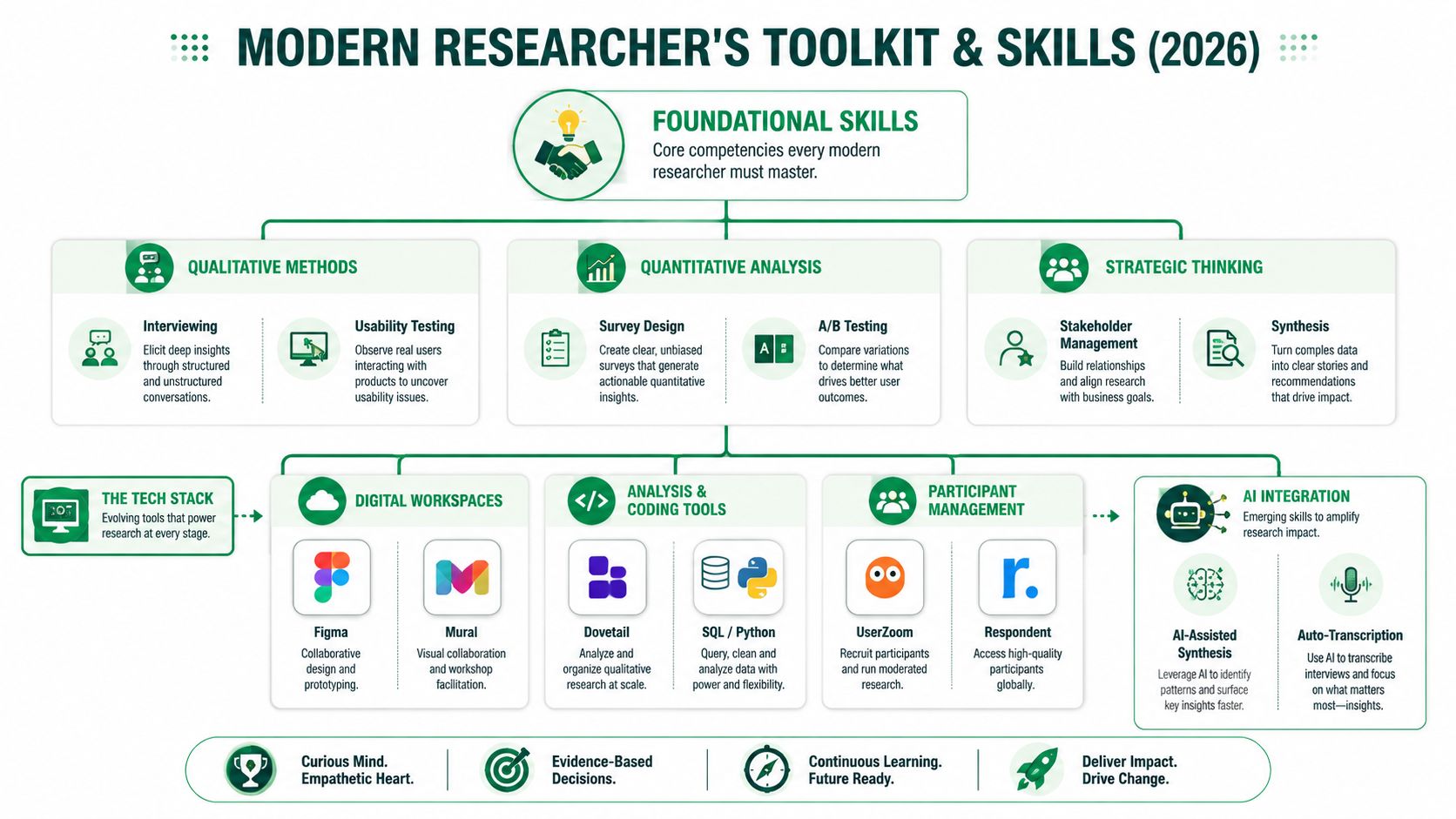
The strongest candidates still know how to run solid interviews and usability tests. That hasn't changed. What has changed is the baseline expectation around analysis, speed, and tool fluency.
Job-market analysis of 1,394 UX research job descriptions found that the role is broad enough to require both qualitative synthesis and structured data handling, which helps explain why candidates who can code or tag data, extract patterns, and translate them into themes have an advantage, according to Drill Bit Labs' analysis of UX research job descriptions.
The non-negotiable foundations
Early-career candidates sometimes overcorrect toward tools. Don't. Hiring managers still care most about whether you understand research logic.
You should be able to do these well:
Usability testing: Write tasks, observe behavior, identify friction, and separate major issues from noise.
User interviews: Ask neutral questions, probe effectively, and avoid turning the session into a guided demo.
Survey design: Use surveys to support the right questions, not as a shortcut for everything.
Journey mapping and synthesis: Pull themes across touchpoints, pain points, and decision moments.
Research planning: Define audience, scope, assumptions, risks, and likely outputs before you start.
Candidates often say they “know qualitative research” when they really mean they've watched a few sessions. That's not enough. You need to show judgment under constraints.
The newer layer employers now value
The role is becoming more hybrid. Teams increasingly want researchers who can work across transcripts, patterns, tags, dashboards, and stakeholder decisions without getting lost in any one layer.
That usually means comfort with:
Collaboration tools like Figma, FigJam, Miro, Notion, and Google Workspace
Analysis workflows that involve coding themes, comparing findings, and structuring evidence
Basic quantitative literacy so you can interpret task success, behavioral trends, or survey outputs responsibly
AI-assisted workflows for synthesis, rapid testing, and continuous validation
If you work with interview-heavy studies, it also helps to compare research transcription tools so you understand accuracy, editing workflow, and how transcripts feed into coding and synthesis.
What works and what doesn't
What works is choosing the tool that matches the question. What doesn't work is forcing every problem through your favorite method.
Here's the difference:
Works: “We need a fast directional read on where a checkout flow breaks, then we'll decide whether to run follow-up interviews.”
Doesn't work: “We always start with interviews,” even when the issue is clearly interaction-level and visible in task behavior.
Tools like AI user research workflows are changing expectations. Uxia, for example, lets teams upload prototypes or flows, define a mission and audience, and generate synthetic test sessions with transcripts, issue flags, and summaries. Used well, that helps researchers validate concepts quickly, compare flows, and decide where deeper human research is worth the extra time.
Fast research is useful when it sharpens judgment. It's harmful when it replaces judgment.
The candidate employers want now is not “traditional” or “AI-first.” It's someone who can preserve research quality while moving at product speed.
How to Build a Portfolio That Proves Your Value
A weak portfolio says you're interested in research. A strong one proves you can do it.
The candidate applications that stand out usually don't rely on perfect brand names or impressive logos. They show a clear line of thinking. One of the best junior applications I've seen came from someone without a formal user researcher title. Instead of listing courses, they included a compact case study: the product flow they evaluated, the question they were trying to answer, the friction they observed, and the product changes they recommended.
Show the thinking, not just the artifact
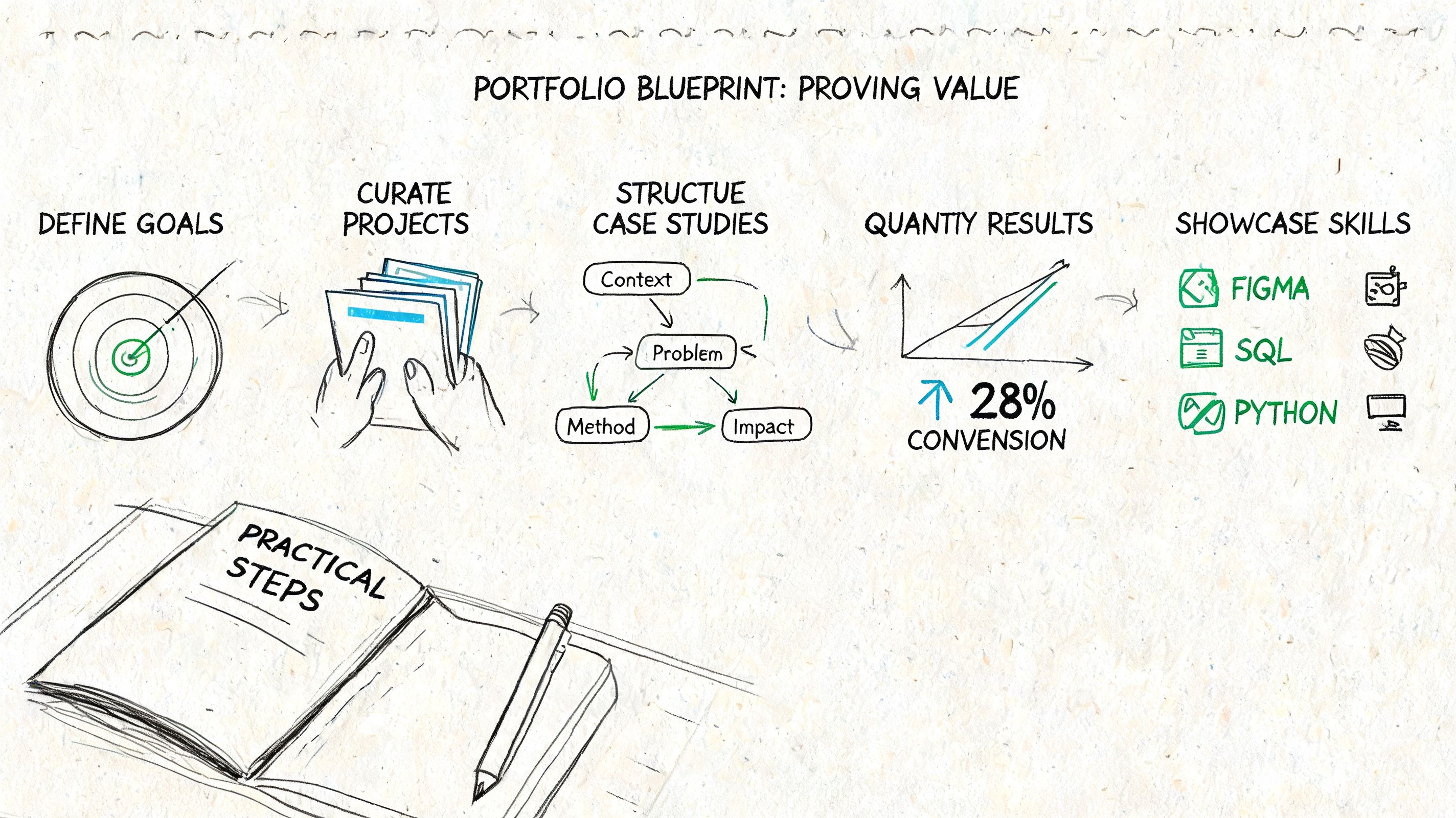
That candidate stood out because the case study had structure. It answered the questions hiring managers ask while reviewing a portfolio:
What was the objective
Who was the user
Why was this worth studying
What method did you choose
What did you learn
What should the team do now
That's enough for a strong junior case study. You do not need a giant deck full of screenshots and jargon. You need clarity.
Hiring lens: A good portfolio makes it easy to see how you move from a messy problem to a usable recommendation.
If you don't have formal experience, create a credible project
You can build a solid portfolio piece without waiting for someone to hand you the title. Pick an existing app, onboarding flow, checkout journey, or support flow. Define a narrow research question. Run a small usability review or moderated test. Then write up what happened in a way that shows discipline.
Good starter project ideas include:
Onboarding audit: Where do first-time users hesitate or misunderstand the next step?
Pricing page evaluation: What creates confusion, mistrust, or decision delay?
Mobile task flow review: Can users complete one high-value task without avoidable friction?
The mistake is making the project too broad. A tighter study almost always reads as more credible.
Use modern workflows in the portfolio itself
A portfolio also signals whether you understand how research gets used today. If you've run a fast validation study with AI support, say so clearly and explain the boundaries. Show what the tool helped you do quickly, then explain what still required human interpretation.
If you need a model for communicating AI-supported findings cleanly, this modern UX research report template for AI insights is a good reference because it keeps the emphasis on evidence, themes, and action rather than novelty.
A short walkthrough helps too:
The standard is simple. Your portfolio should make a hiring manager think, “This person can help my team make a decision.” If it only makes them think, “This person likes research,” it needs more work.
Understanding the User Research Job Market and Salary
The market has been rough in places, and pretending otherwise doesn't help anyone. But the field also hasn't disappeared.
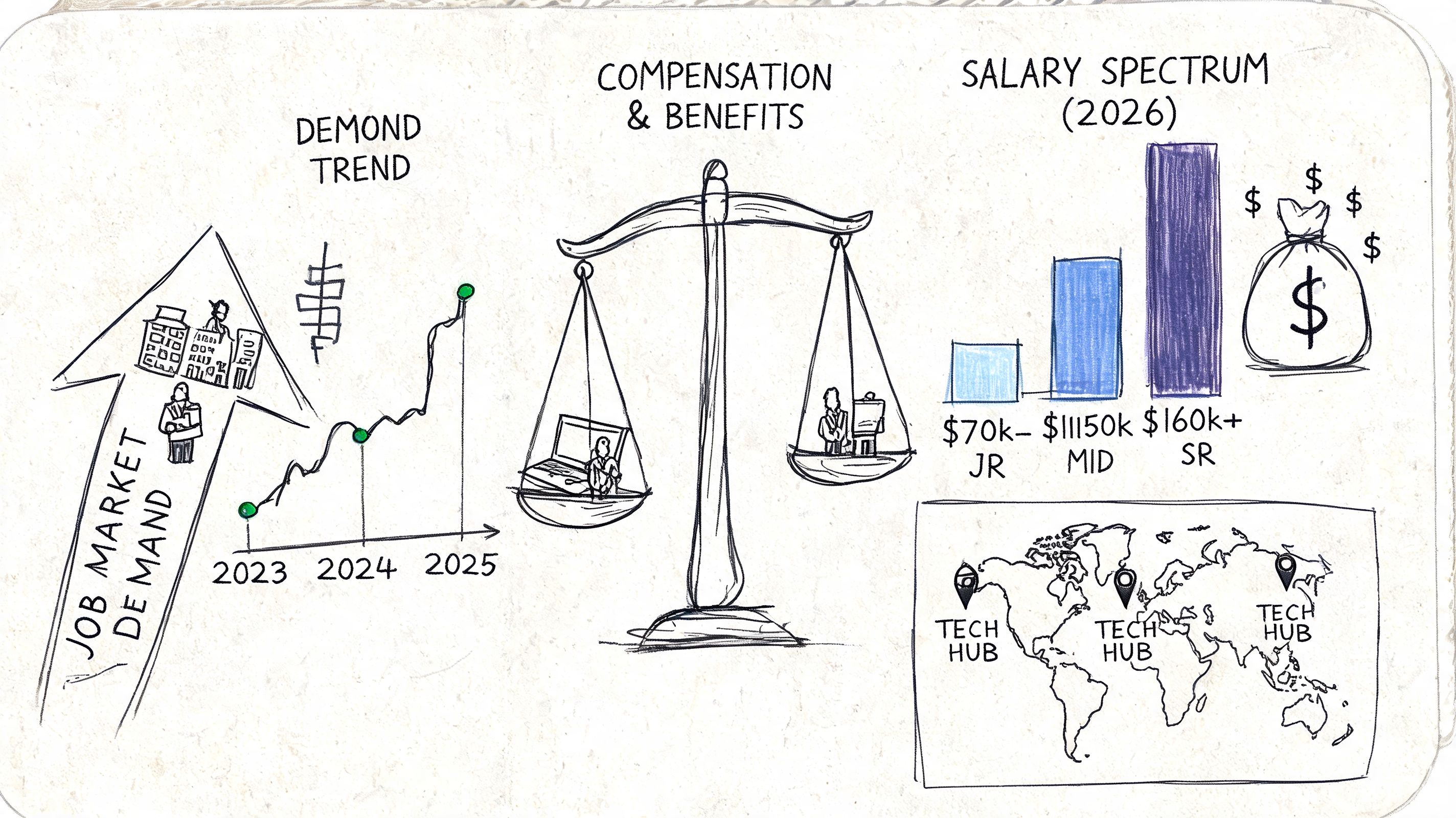
The 2025 State of User Research report surveyed 485 researchers worldwide and found that 21% of respondents said their companies laid off user or UX researchers, while the average prevalence of layoffs across departments was 20%. The same report found the share of respondents saying their company had zero dedicated UX researchers fell from 19% in 2019 to 6% in 2022, then rose to nearly 14% in 2025. It also reported a global median researcher salary of $105,500 in 2025, nearly 8% higher than 2024, as shown in the 2025 State of User Research report.
What those numbers actually mean
The cleanest reading is this: the profession is cyclical, not dead. Some teams cut dedicated research roles. Others kept them. Larger and more mature product organizations still tend to embed research as part of how product decisions get made.
That's important for candidates. It means you shouldn't judge the whole field by one hiring slump or one bad quarter. You should look at where research is treated as a decision function, not an optional extra.
How to use salary data realistically
Salary numbers are helpful, but they can mislead if you treat them like a guaranteed range. Compensation still depends on location, level, company maturity, and whether the role sits inside a mature product organization or a more tactical delivery team.
Use market data for orientation, then pressure-test the role itself. Ask:
Where does research sit in the org
Who uses the findings
What decisions will this role influence
Is this a standalone role or a support function
How much of the job is execution versus strategy
A lower-title role with real ownership can be better than a nicer title with no influence. In user research jobs, quality of scope often matters more than title prestige.
Where to Find Jobs and How to Ace the Interview
General job boards are fine for volume, but they're noisy. Good candidates usually combine broad search with targeted search. They look at product companies they admire, agency sites, Slack communities, UX associations, and remote-first boards that surface distributed opportunities.
The hiring outlook is mixed but still active. Historical UXPA salary data summarized by MeasuringU described 2024 as a difficult year, with 35% of respondents reporting staff loss. At the same time, 70% of organizations in a position to hire said they planned to hire at least one UX role in 2025, and 20% planned to hire three or more, according to MeasuringU's review of the 2025 UX job market.
Where to look beyond the obvious
If you want more signal and less clutter, diversify your search.
Company career pages: Especially for SaaS, fintech, health tech, and enterprise product firms.
Professional communities: UX Slack groups, design communities, and research meetups often surface openings before they spread widely.
Remote-first boards: If location flexibility matters, it helps to find remote jobs in places that curate distributed roles instead of mixing them into generic search results.
Contract and adjacent roles: Short-term research support, content design, customer insight, and service design roles can all be valid entry points.
What to do before you apply
Tailor the application around evidence of real user contact and synthesis. If your background is in customer support, market research, analytics, service design, or product operations, make that visible. Those experiences often transfer well.
Your resume should show proof of these abilities:
Framing questions: What problem were you trying to understand?
Working with users or customers: Did you interview, observe, support, or analyze them?
Finding patterns: Did you synthesize recurring issues or behaviors?
Influencing action: What changed because of your work?
A generic resume full of methods without context won't stand out. Neither will a cover letter that says you're “passionate about people.” Show how you've already worked with ambiguity, evidence, and product decisions.
How to handle the interview
Most user research interviews test three things. Can you think clearly, can you communicate trade-offs, and can you connect findings to decisions.
Prepare for these moments:
Portfolio walkthrough
Keep it short and decision-focused. Explain the objective, method choice, findings, and recommendation.Research challenge
You may get a hypothetical scenario and be asked how you'd study it. Start with the decision, then explain scope, method, trade-offs, and risks.Behavioral questions
Expect questions about disagreement, ambiguity, deadlines, and stakeholder pushback.
Don't try to sound perfect in interviews. Sound useful. Hiring managers trust candidates who can explain trade-offs better than candidates who claim they always know the answer.
Your Career Path in User Research
User research isn't one job. It's a career with several branches.
You might start in a generalist role, then move toward senior or principal research. You might become a research manager. You might specialize in research operations, insight systems, service design, or mixed-method product strategy. Some researchers eventually move into product management because they're already strong at framing decisions, prioritizing uncertainty, and aligning teams around evidence.
The durable part of the career hasn't changed. Good researchers stay valuable because they can understand people, ask better questions, and communicate clearly across functions. What is changing is the environment around those skills. Teams expect tighter turnaround, better synthesis, and more comfort with AI-assisted workflows.
That shift creates pressure, but it also creates openings. Candidates who don't come from a textbook UX path can still break in if they can show real user contact, structured thinking, and practical recommendations. In many cases, they can move faster than candidates who only know the old playbook.
If you want a long career in user research jobs, build the timeless skills first. Then learn how to use newer tools without confusing speed for rigor. That combination tends to age well.
If you want to practice that modern workflow, Uxia gives product teams and researchers a way to test prototypes and flows with synthetic users, review transcripts and issue summaries, and bring faster directional evidence into product decisions without waiting on a full traditional study every time.