Two Saturdays, two cities, a room of product people who don't write code.
This is how Product Build Day teams in Warsaw and Athens used Lovable and Uxia to turn real problems into working, validated products in a single day.

How it started
Marcin Klimaszewski stopped by the Uxia stand at UXDX Berlin in late May. A few days later he sent a proposal that was refreshingly free of ambiguity:
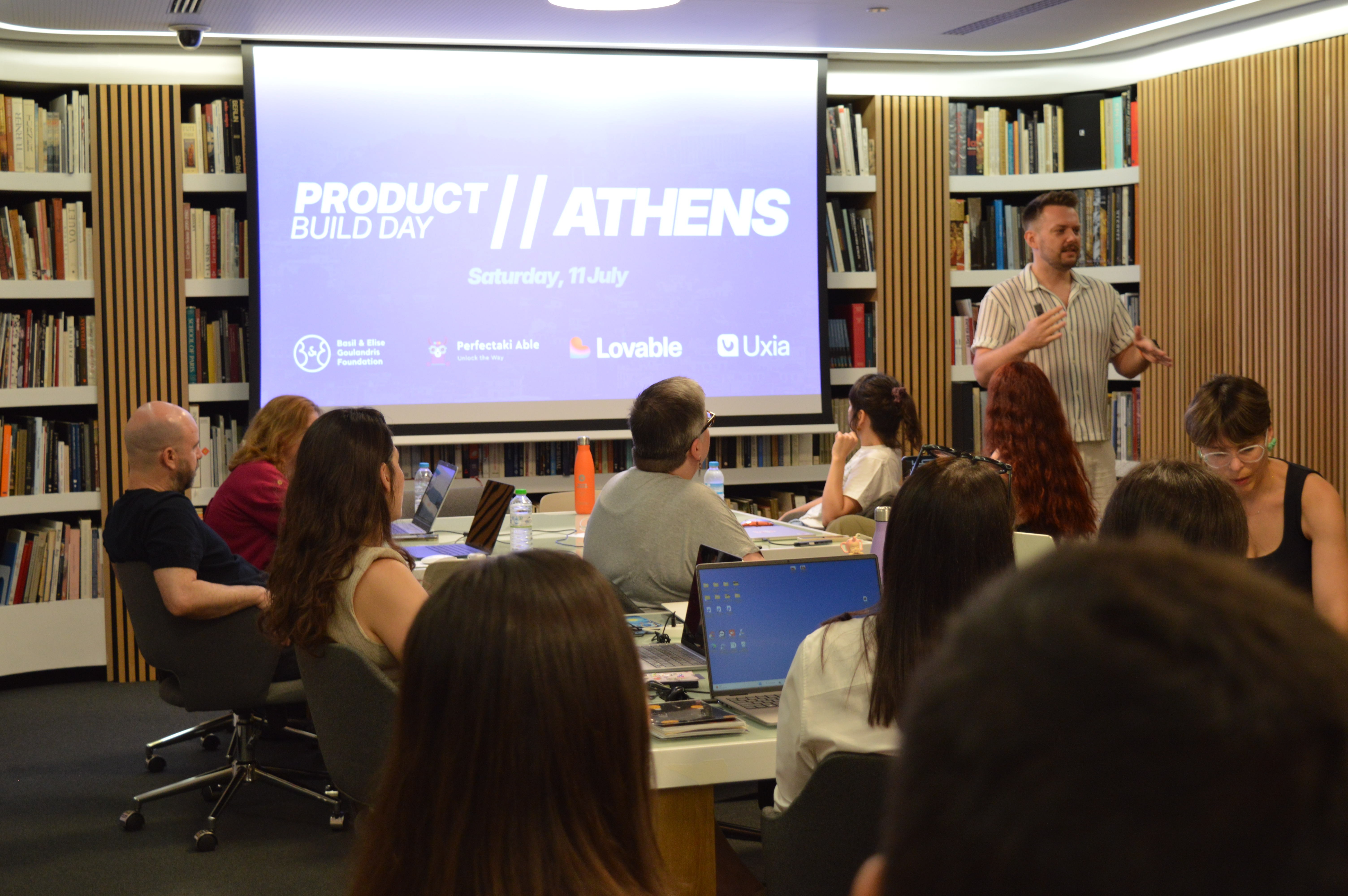
"On Saturday 11 July I am running a Product Build Day in Athens, free and in person. A room of product people who do not code — PMs, designers, UX, heads of product — build a working prototype with AI in a day. Basically your buyers.
You give free Uxia access on the day, and everyone runs one test on the thing they just built."
That last sentence is the whole partnership. Not a logo on a banner. Every participant, running a real test, on something they built that morning.
We said yes within a week. Two events: Warsaw on 4 July, Athens on 11 July 2026. Around twenty seats each, free to attend, with briefs drawn from real civic problems rather than commercial products.
The thesis: building got cheap, discovery didn't
Marcin's argument is that the bottleneck moved. It used to be engineering capacity. Now that anyone can describe an app and watch it appear, the scarce skill is judgment — knowing which idea deserves the quarter.
Which is why Product Build Day isn't a build sprint that happens to include testing. It's a validation sprint that happens to include building. His framing: build before build. Make the working prototype, put it in front of users now, before you commit.
That only works if testing is as cheap as building. Lovable made the first half cheap. Our job was the second half.
What it actually took to make that work
The interesting part of this partnership wasn't the sponsorship. It was the plumbing.
Accounts had to exist before Saturday. Marcin ran a 45-minute prep session two evenings before each event, where Victor walked the room through the platform and participants registered. He sent us the list; we provisioned before the weekend.
We broke our own signup rule. Participants wanted to register with personal Gmail addresses, and Uxia required a work email. Rather than make a room full of people invent a work address on a Saturday morning, we whitelisted the lists Marcin sent us. Small thing. It would have been a wall at 9am otherwise.
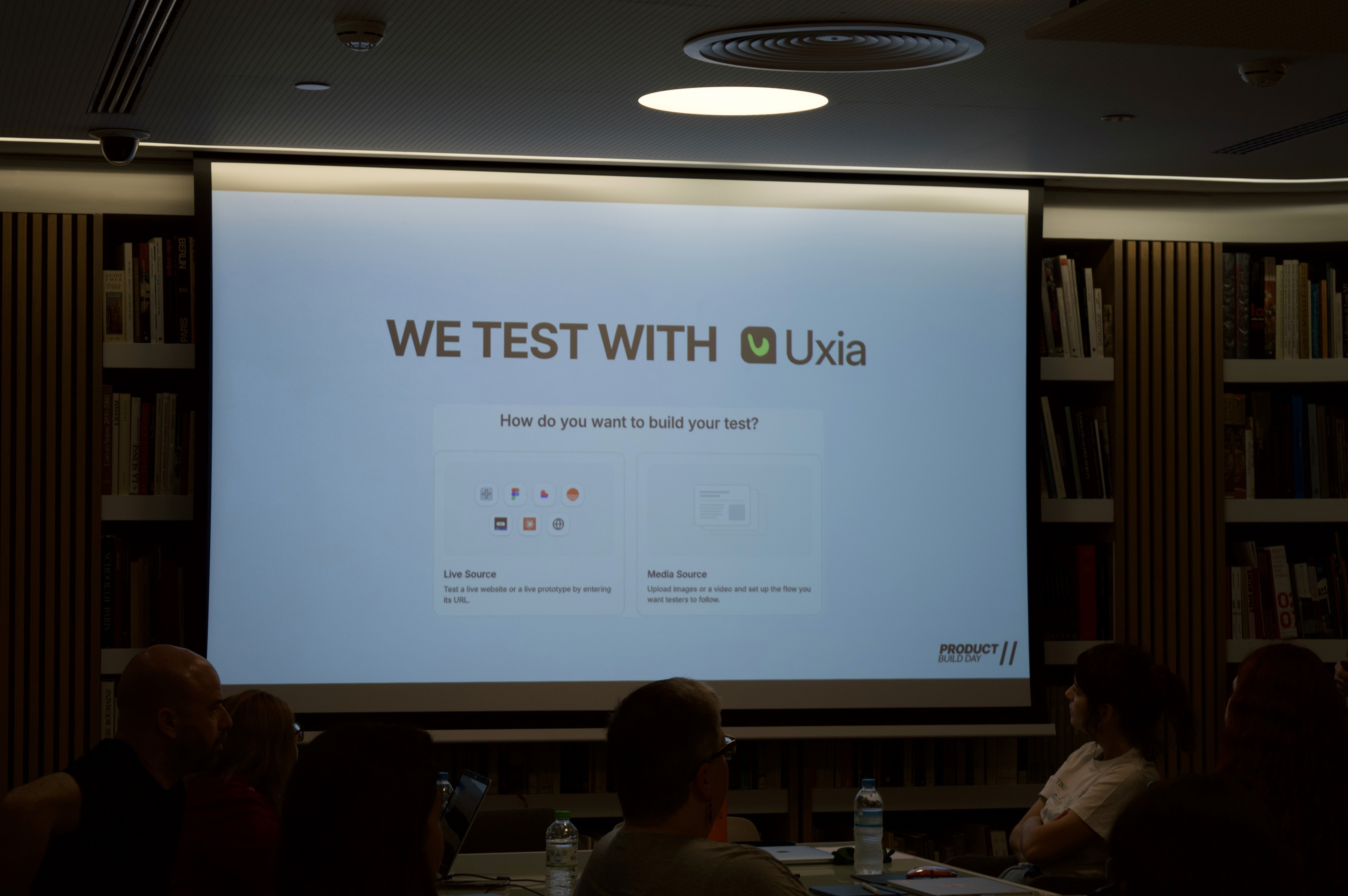
Credits were sized to the day. Each participant received 300 credits. An AI user test on a Lovable prototype costs 25 credits per synthetic tester, so we recommended two runs of five or six testers each — enough to test, learn something, change the prototype, and test again. The second run is the point. One test tells you what's wrong; two tell you whether you fixed it.
Someone was reachable on the day. In Warsaw, Magdalena Szary's team lost their credits to a misconfigured test. She emailed at 13:09. Victor had topped her account up with 250 extra credits by 15:15. Her team went on to win Product Build Day Warsaw.
Nothing in that paragraph is a product feature. It's the difference between a tool being present at an event and a tool being used at one.
Warsaw, 4 July
Two tracks: Everyday Law and Shared Living. Twenty-one participants — PMs, UX designers, product owners — who worked solo first, producing twenty-one different answers to the same brief before forming teams.
The law brief came from Krystyna Zuzanna Siwicka, an advocate at SKLAW: help someone with no legal background understand an official letter or contract. What it means, what to do, by when.
Tomasz Rusiłko's team won it by asking Krystyna one question — what is the single most important thing here? She said the deadline has to be visible. They built the entire product around that answer, shipped it in Lovable, and tested it on synthetic users the same afternoon.
"A client always knows what they want. Until they see it. Then they realize they wanted something else entirely."
— Tomasz Rusiłko, Senior Product Manager
"The energy in the room was incredible. It was my first time mentoring, and it showed me just how important conversations are."
— Krystyna Zuzanna Siwicka, Advocate, SKLAW
The part that happened the following week
Yurii, a project manager on the same track, finished building by 15:30 and tested that afternoon. The week after, he messaged Marcin at 9:45 PM:
"I used the tool I built on Product Build Day to review and negotiate my new contract. And it works perfectly!"
He used his own hackathon prototype to negotiate his actual employment contract. Prototypes validated the day they're built have a habit of outliving the day.
Three reactions from Warsaw participants:
"Surprisingly easy to use and highly impactful. My first run perfectly segmented product pros and cons, giving me clear direction for the next iteration."
"It's a really great tool. The insights were interesting, and the test was very easy to complete. I'll be happy to use it in the future."
"It's quite inspiring. I had no idea this existed."
Athens, 11 July
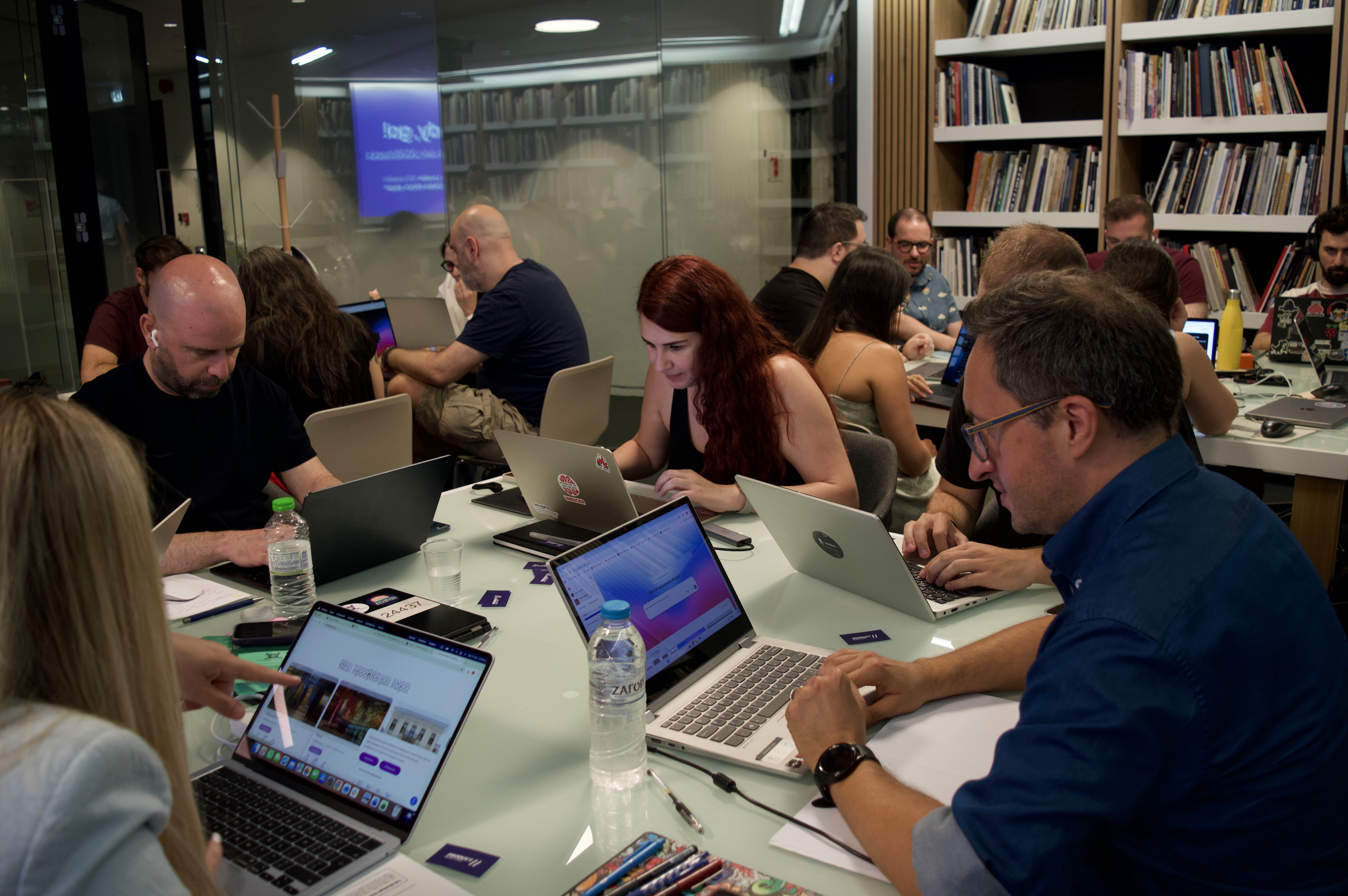
The first Product Build Day in Greece, held in the library of the Basil & Elise Goulandris Foundation. Two tracks, both real problems from real Athens organisations.
The museum track, mentored by Dimitris Feidanoglou: let a gallery visitor remix fragments of collection works into an image of their own and share it in under a minute.
The Accessible Athens track, mentored by Christina Zeri of Perfectaki Able: get clean, reliable accessibility data out of ambassadors who physically audit venues.
By evening, working apps existed that hadn't that morning.
The accessibility winners — Olga Markaki, Odisseas M. Karipis, Elena Tzerefou, Eleni Antonopoulou and Alexandros Lagios — built a mobile auditor app that runs the ramp math itself, shows one field at a time so nobody burns out mid-audit, and turns reviews into a small game.
None of those three decisions falls out of a brief. You get them from watching someone use the thing. They got them in an afternoon.
"Using tools like Lovable and Uxia for user testing, the results we achieved left us truly amazed."
— Olga Markaki, Product Designer, Digital Winners
The people who weren't supposed to be able to do this
Włodzimierz Kościuszko works in compliance and AI governance. He applied on a whim, certain he'd be turned down, then panicked when he was accepted. He built his first webpage ever that day, and used Uxia to make it meaningfully more usable. Six hours later he had a working page, a new team, and a toolset he can use on his own.
Lamprini-Lydia Petropoulou is an art historian. No tech background, first hackathon, and she shipped and validated an AI-powered art-accessibility tool.
"You do not need to know everything before you begin. You need a meaningful purpose, a willingness to learn and the courage to collaborate."
— Lamprini-Lydia Petropoulou, Art Historian & Art Educator
The tools did the typing. She brought what tools can't: knowing the problem.
What changes when testing costs nothing
Christina Fotinopoulou has spent 25+ years in marketing. She came out of Athens arguing that the more useful half of the story isn't how fast you can build — it's how fast you can test. Her team built the museum app, and what stayed with her was watching synthetic testers surface weak points and then fixing them in minutes, inside the same session.
Her conclusion: testing became so easy there was no excuse to skip it. The fundamentals didn't move — understand people, solve real problems, validate before you scale. AI removed the repetitive hours, not the thinking.
That's the behavioural shift the whole day is engineered around. Flip the cost of testing to near zero and the habit changes on its own. You check your idea against real reactions before you fall in love with it — not after you've spent a quarter defending it.
Others in the room said much the same:
"I really liked it! I believe it has many uses, especially in difficult industries like private banking, where actual users are difficult to find."
— Nefeli Maria Kavvada, Senior Content & UI Innovation Designer, Significa
"I think it's an amazing idea and a very helpful tool."
— Odisseas M. Karipis, Founder & Digital Strategist, WebPartner
"It's definitely a platform that I want to work with much more. I really want to dive deeper into it and see just how functional and effective the results it displays turn out to be."
— Olga Markaki, Product Designer, Digital Winners
"Very positive. It was well organized, inspiring, and provided a great environment to learn and build."
— Dimosthenis Stergiopoulos, Data Engineer, Novibet
The facilitator's view
Marcin has fifteen years in product development, and he framed the problem the way most product leaders would recognise it — as a budget fight that never quite gets won.
"There was always a struggle with having enough user testing and a constant fight for a budget and time. I was always looking for solutions that will make it easier and cheaper so I can use it both in the discovery or optimization phase. Synthetic users are a direct answer to this."
On why it fits a one-day format in particular:
"Testing with humans is very expensive and takes weeks of preparation, recruitment, etc., especially when you want to do this right and have participants that are close to your criteria and are not professional user testers, because that happens too often.
Synthetic user testing is amazing to jump in even during the midday of building something. As a facilitator of vibe coding hackathons, it's a great tool to use during those one-day events because real user testing would be very hard to do."
And the outcome he watched happen in the room — which is the sentence we'd frame if we framed one:
"I observe dozens of participants amazed by your tool because it gave such great findings. They really appreciated, respected, and trusted it, and I've seen people pivoting their ideas based on outcomes from your tool."
He also makes an argument we didn't make ourselves, and it's the one worth sitting with. The usual worry about synthetic users is that they'll be used as a substitute for talking to people. Marcin's read is the opposite:
"I deeply believe that this will also convince a lot of people to invest more in human testing in the future. Your tool can also save some time on human user testing because it will discover things that don't need to be discovered by humans anymore. We can specialize in human testing — make them more about things that are unique to humans and very niche human experience."
That's the version of this we're building toward. Synthetic testing catches what doesn't need a human in the room — broken flows, confusing labels, the dead end on step three — so that the human sessions you do pay for get spent on the questions only humans can answer.
"Synthetic user testing is an amazing tool for frequent testing and decreasing the amount of issues, not only usability and UI issues but also issues with user flows, which is very advanced, I must say, to test, and your tool is doing that."
— Marcin Klimaszewski, Founder, Product Build Day
What the two days proved
Two cities, two Saturdays, every participant walking out with a working, tested product
Non-coders throughout — a compliance specialist, an art historian, a 25-year marketing veteran — all validating real prototypes the same day they built them
The consistent surprise wasn't that people could build. Most of them expected that by now.
It was that they could test. Same day, in minutes, against reactions specific enough to change the next version.
As Marcin put it after Athens: the sponsored credits meant every team could run a real test on what they built the same day, instead of walking out with a prototype and a guess.
That's the gap worth closing. Not the building. The knowing.